What Is a Step Seal?
When you are choosing a sealing solution for your hydraulic or pneumatic system, a step seal offers one of the most reliable and high-performance options available.
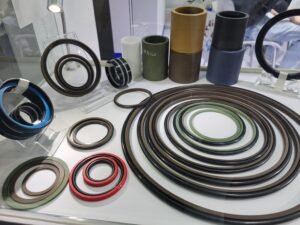
This seal consists of a modified PTFE step-profile sealing ring combined with an elastomer O-ring, providing both the stability you need for static sealing and the adaptability required for dynamic sealing.
If you work with hydraulic, pneumatic, or any machinery manufacturer, this type of seal creates a highly effective dual-barrier sealing system that protects your equipment even in demanding environments.
Understanding the Structure and Materials
The Step Seal was originally developed by Swedish engineer Sten Eden; you’ve likely seen it used in countless applications.
A step seal is typically made of two parts:
1. The Main Sealing Ring (PTFE / Filled PTFE)
This ring is machined from PTFE or bronze-filled PTFE This ring is machined from PTFE or bronze-filled PTFE and has these advantages:
-
Extremely low friction
-
High wear resistance
-
Superior performance under high speed and high pressure
2. The O-Ring (NBR / FKM)
The elastomer O-ring provides the preload force you rely on for consistent sealing.
-
NBR works well with mineral hydraulic oils
-
FKM handles high temperature and synthetic fluids
By selecting the right PTFE compound and O-ring material, you can optimize your seal for all kinds of hydraulic media, temperatures, and pressures.
Why Step Seal’s Geometry Matters
The step-shaped profile you see isn’t a simple geometric cut—it’s the result of fluid dynamics calculations designed to give you the most stable sealing performance possible.
For example:
A 30°–45° sealing lip angle allows controlled shear flow along the oil film.
A 0.1–0.3 mm labyrinth channel helps intercept contaminants without increasing fluid resistance too much.
With this geometry, your Step Seal can maintain stable lubrication even when your cylinder reaches speeds of up to 15 m/s.
How Step Seal Works Under Pressure
When your hydraulic system is pressurized, the medium pushes the PTFE ring outward, while the O-ring preloads the contact force.
You’ll notice that as pressure increases, the PTFE ring adapts its deformation so you get reliable sealing even under fluctuating conditions.
This pressure-assisted sealing effect is one of the reasons Step Seals outperform many traditional sealing structures.
Key Advantages You Get from Step Seal
When you pick a Step Seal for your system, here’s what you typically gain:
-
Low friction thanks to the PTFE material
-
High wear resistance, essential for frequent motion
-
Excellent chemical resistance
-
Bi-directional sealing, so you can seal pressure from both sides
-
Much longer service life compared with conventional rubber seals
All these characteristics make the Step Seal a dependable choice when your equipment requires stable and long-term sealing performance.
How to Select and Install Your Step Seal
How You Choose the Correct Step Seal
You should consider:
-
Pressure range
-
Temperature range
-
Type of medium
-
Speed and motion type
Installing PTFE Step Seals—What You Must Pay Attention To
From practical engineering experience, you should always:
-
Keep the groove, shaft, and sealing surfaces clean
-
Avoid twisting the O-ring during installation
-
Prevent overstretching the PTFE ring
-
Use proper installation tools
-
Follow your equipment’s installation guidelines closely
Maintaining Your Step Seal
You should periodically check for:
-
Lip wear
-
Hardening or deformation of the O-ring
-
Early leakage traces
If you see any of these signs, replacing the seal immediately helps you prevent bigger system failures later.
Where the PTFE Step Seal Can Be Used
Because Step Seals offer such strong mechanical and chemical stability, you can use them across a broad range of industries.
Hydraulic Systems
You’ll commonly use these seals in cylinders, motors, and pumps—core components in hydraulic seal systems.
Engineering Machinery
If you work with an excavator, bulldozer, loader, or other heavy machinery, step seals help your equipment survive heavy loads, dirt, shock, and harsh conditions.
Pneumatic Systems
They provide excellent sealing for air cylinders, pneumatic valves, and actuators.
Petrochemical Industry
You’ll rely on PTFE Step Seals in reactors, storage tanks, and chemical pipelines because of their high chemical resistance.
Pharmaceutical Industry
If sanitary and contamination-free production is important to your work, PTFE seals ensure reliable sealing in mixers, reactors, and transfer lines.
Power Generation
Turbines, generators, and high-temperature machinery often depend on PTFE step seals for long-term stable sealing.
Food Processing
These seals offer low friction, cleanliness, and consistent performance in packaging machines and mixing equipment.
Automotive Industry
Used in engines, transmissions, pumps, and many dynamic sealing applications.
Aerospace
If your system needs to handle extreme temperatures, pressure changes, and vibration, PTFE Step Seals are a proven solution.
Why You Might Choose TYS as Your Step Seal Supplier
If you’re looking for a reliable Step Seal supplier, TYS Seals provides several performance and service advantages that many overseas buyers value.
1. You Get Ultra-Low Friction and High Wear Resistance
TYS Step Seals are engineered to deliver:
-
0.02–0.04 friction coefficient
-
Up to 300% improved wear resistance
-
Stable elasticity from −45°C to 200°C
These characteristics give you long-term stability even under high-speed and high-temperature conditions.
2. You Can Choose Between NBR and FKM O-Rings
Depending on your fluid medium, TYS configures the seal to give you the best compatibility and performance.
3. You Benefit from TYS’ Three Specialized Factories
Each factory focuses on a different category of industrial seals, ensuring that your Step Seals are produced with precision and quality control.
4. You Get Strong Export and Technical Support
TYS offers:
-
Fast response time
-
Stable delivery cycles
-
Flexible customization
-
Professional support from an experienced foreign-trade team
5. You Can Request Fully Customized Sealing Solutions
Whether your system requires special materials, modified geometries, or performance-specific PTFE compounds, TYS can customize sealing solutions that fit your working conditions exactly. that fits your working conditions exactly.
Future Trends of Step Seal
1. New Material Technologies
You will soon see nano-reinforced PTFE and advanced composite materials further improving sealing performance.
2. Smart Monitoring
Future Step Seals may include embedded sensors that help you monitor wear and sealing performance in real time.
3. Eco-Friendly Manufacturing
More recyclable materials and energy-efficient production processes are becoming standard.
4. Increasing Customization
More manufacturers will require industry-specific sealing profiles to match demanding applications.
Final Thoughts
If your machinery requires long-term reliability, high chemical resistance, and low friction, a PTFE Step Seal is one of the best choices you can make.
And when you work with TYS hydraulic seals, you gain access to advanced PTFE machining, precision manufacturing, and engineering support—ensuring your hydraulic and pneumatic systems operate efficiently and reliably.