Let’s Talk About Glyd Ring Seal
If someone has worked with hydraulic cylinders long enough, they have probably seen this situation:
-
the cylinder starts fine, then begins to crawl at low speed
-
seals wear out faster than expected
-
or leakage shows up under pressure
In many of these cases, switching to a Glyd Ring Seal solves the problem—not because it’s “new,” but because its design simply makes more sense for dynamic sealing.
What Is a Glyd Ring Seal?
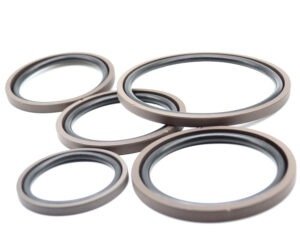
A Glyd Ring is not a single material seal. It’s a combination design, made of:
-
a PTFE sealing ring (the part that actually does the sealing and sliding)
-
an elastomer O-ring (the part that provides preload force)
Think of it this way:
-
PTFE handles friction, wear, and chemical resistance
-
the O-ring acts like a built-in spring, constantly pushing the PTFE ring into position
This combination fixes a common issue in sealing design:
-
PTFE alone → great friction, but no elasticity
-
rubber alone → good elasticity, but too much friction and wear
The Glyd Ring simply combines the best of both.
How is the sealing actually work?
From an engineering point of view, the sealing behavior happens in two stages:
1. At Startup or Low Pressure
Before pressure builds up, the O-ring is already applying force.
That means:
-
the PTFE ring is already in contact
-
sealing starts immediately
-
no “initial leakage” problem
2. Under Working Pressure
Once pressure increases, things get more interesting.
The system pressure pushes the O-ring, and the O-ring transfers that force to the PTFE ring.
In simple terms:
-
higher pressure → stronger sealing force
-
the seal becomes tighter automatically
This is why Glyd Rings are often called self-energizing seals.
Why Engineers Prefer Glyd Ring Seal
1. Very Low Friction (No Stick-Slip)
PTFE has one of the lowest friction coefficients among sealing materials.
In real machines, this means:
-
smoother cylinder movement
-
no crawling at low speed
-
better control accuracy
2. Handles High Pressure Without Extrusion
With proper groove design, Glyd Rings can typically handle:
-
up to 40 MPa in most applications
The combination structure helps prevent the PTFE from being pushed into gaps.
3. Works Across Different Media
In actual projects, fluid compatibility matters more than theory.
Glyd Ring Seal work well with:
-
mineral hydraulic oil
-
water-glycol fluids
-
emulsions (HFA / HFB)
-
even air or water in some cases
4. Wide Temperature Range
This mainly depends on the O-ring material:
-
NBR → around -35°C to +120°C
-
FKM → up to +200°C
So selection is straightforward—just match the environment.
5. Suitable for High-Speed Cylinders
In dynamic systems, speed is often a limiting factor.
Glyd Rings can handle:
-
reciprocating speeds up to 5 m/s
Which is more than enough for most industrial cylinders.
6. Longer Service Life
From maintenance experience:
-
PTFE wears slowly
-
O-ring is protected inside
-
fewer replacements
-
less downtime
That’s where real cost savings come from—not just unit price.
Piston Seal vs Rod Seal: Don’t Mix Them Up
This is a common mistake in selection in piston seals and rod seals.
-
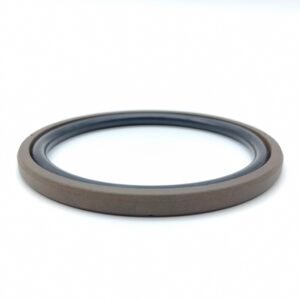
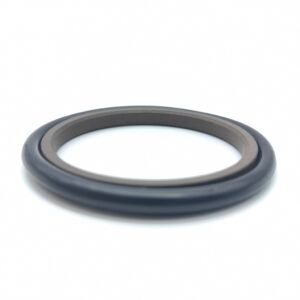
Piston (bore) Glyd Ring → seals against cylinder bore
-
Rod Glyd Ring → seals against piston rod
The structure is the same, but:
-
sealing direction
-
pressure side
-
installation orientation
are different.
Getting this wrong will lead to leakage—even if the seal itself is correct.
Where Glyd Ring Seals Are Commonly Used
In real-world applications, Glyd Rings show up in:
-
injection molding machines
-
excavators and construction equipment
-
machine tools
-
metallurgical systems
-
marine hydraulics
-
aerospace actuators
Basically, anywhere you need:
-
high pressure
-
smooth motion
-
reliable sealing
Key Selection Tips (From Practical Experience)
If someone is selecting a Glyd Ring, these points matter more than datasheets:
1. Material Match
Always check:
-
temperature
-
fluid compatibility
Don’t default to NBR if temperature is high.
2. Surface Finish
Recommended:
-
Ra 0.2–0.8 μm
Too rough → wear
Too smooth → lubrication issues
3. Clearance Control
This is critical at high pressure.
If clearance is too large:
-
PTFE extrusion will happen
4. Installation Matters More Than You Think
Many failures come from installation damage.
Use:
-
lead-in chamfers
-
proper tools
Avoid:
-
sharp edges
-
forced installation
Final Thoughts
The reason Glyd Rings Seals are widely used is not marketing—it’s practicality.
They solve a real engineering conflict:
-
low friction vs sealing force
-
high pressure vs long life
By combining PTFE and elastomer, they achieve both.
For anyone working with hydraulic cylinders, understanding how Glyd Rings behave in real conditions can make a noticeable difference in system performance and reliability.
Why Manufacturing Quality Matters More Than You Think
Even with the correct design, performance still depends heavily on manufacturing quality.
Key factors include:
-
PTFE material formulation consistency
-
machining precision of sealing profiles
-
surface finish of sealing edges
-
dimensional tolerance control
Small deviations can result in:
-
uneven wear
-
leakage
-
unstable performance
TYS Glyd Ring Seals Manufacturing Capabilities
For applications where standard seals cannot fully meet performance expectations, working with a manufacturer that understands both materials and application conditions becomes critical.
TYS specializes in PTFE-based sealing solutions, particularly in:
-
custom Glyd Ring design for high-pressure systems
-
multiple PTFE compound formulations (wear-resistant, low-friction, high-load)
-
precision machining for tight tolerance sealing profiles
-
matching O-ring materials based on real working environments
From a production standpoint, TYS focuses on:
-
stable material quality across batches
-
consistent dimensional accuracy
-
support for customized sizes and non-standard groove designs
In practical terms, this means:
-
better sealing stability
-
longer service life
-
fewer unexpected failures in the field
Ready to Improve Your Sealing Performance?
If there are ongoing issues such as:
-
leakage under pressure
-
stick-slip in low-speed operation
-
frequent seal replacement
it may not be just a product issue—it may be a design and material combination issue.
Working with an experienced manufacturer can help evaluate:
-
whether a Glyd Ring is suitable
-
which PTFE compound performs best
-
how to optimize groove and clearance design
Get in touch with TYS to discuss your application, and explore a more reliable sealing solution tailored to your working conditions.