Glyd Ring vs. Step Seal: How to Pick the Right Hydraulic Seal for Your Cylinder
If you’ve ever pulled apart a hydraulic cylinder and found a worn-out seal that let oil weep past the piston, you already know why this decision matters. Pick the wrong seal profile and you’re back under the machine in six months. Pick the right one and you might not touch that cylinder again for years.
Two seal types come up constantly in these conversations: the Glyd Ring and the Step Seal. Both combine a PTFE wear ring with an O-ring underneath it, but they’re built for opposite jobs. Here’s how to tell them apart and know which one belongs in your system.

The Quick Answer
If you need to remember one line before you walk into the parts store: bore seals (piston) want a Glyd Ring, rod seals (piston rod) want a Step Seal.
- Glyd Ring — symmetrical, seals in both directions, goes on the piston.
- Step Seal — stepped, seals in one direction only, goes on the rod.
Now let’s look at why.
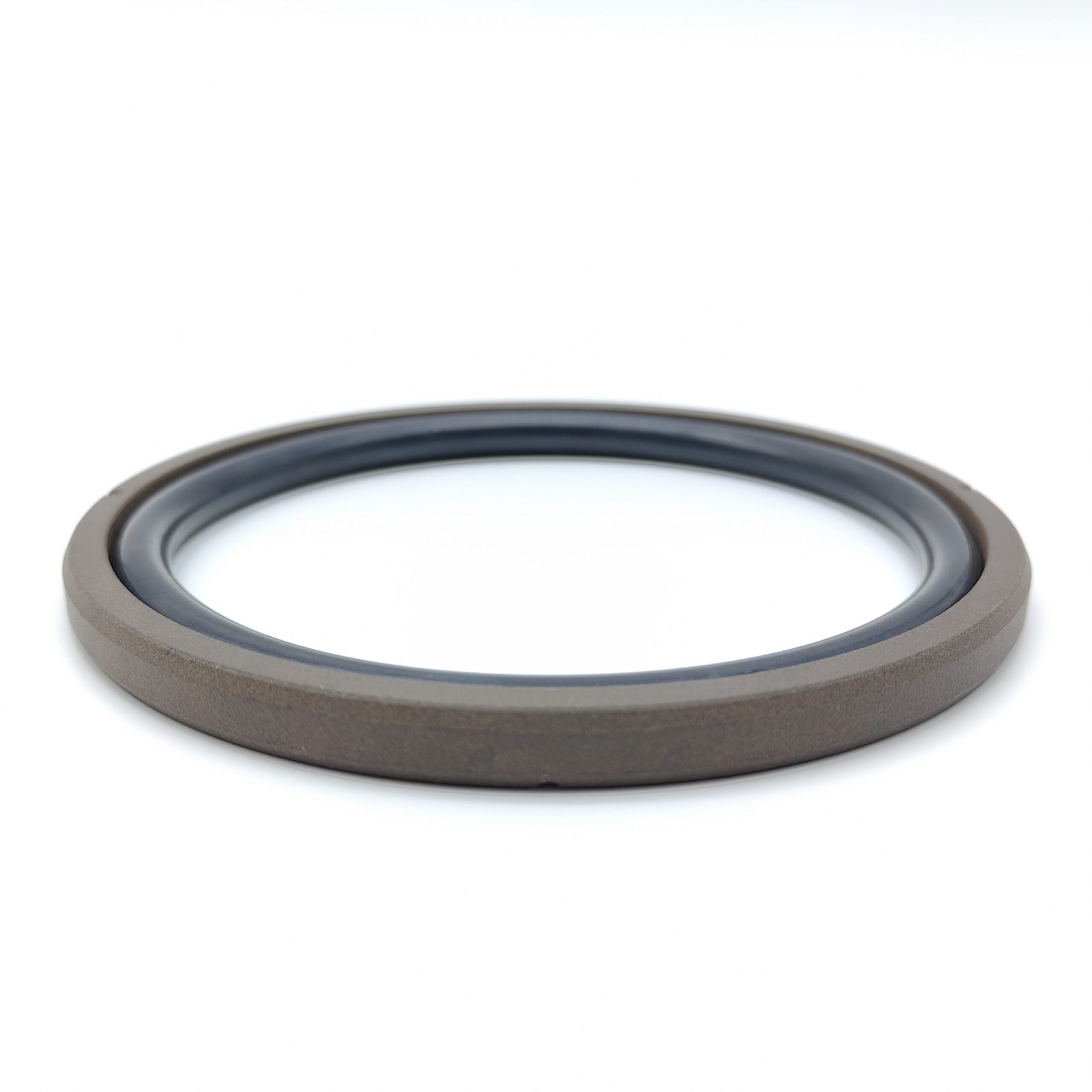
What a Glyd Ring Actually Is
A Glyd Ring is a two-piece seal: a rectangular PTFE slide ring paired with a rubber O-ring tucked inside it. The O-ring does the preloading work — it pushes the PTFE ring against the sealing surface even before any pressure builds up. Once the system pressurizes, the fluid pushes on the O-ring, which in turn presses the PTFE ring even harder against the bore wall. The higher the pressure, the tighter the seal — that’s the whole point of the design.
The PTFE itself is usually filled with bronze, carbon fiber, or graphite, which is why it holds up so well under friction: low friction coefficient, strong wear resistance, and it resists being squeezed out of its groove under load.
Because the cross-section is rectangular and symmetrical, you can install a Glyd Ring without worrying about orientation. It seals equally well whether pressure comes from the left or the right — which is exactly why it’s the standard choice among hydraulic piston seals, where pressure can hit from either side of the piston during the extend and retract stroke.

In practical terms, a Glyd Ring gives you:
– Two-way sealing with no installation direction to get wrong
– Strong wear resistance in dirty, high-cycle, or extreme-temperature environments
– A design that scrapes contamination and drag-back oil away from the sealing face
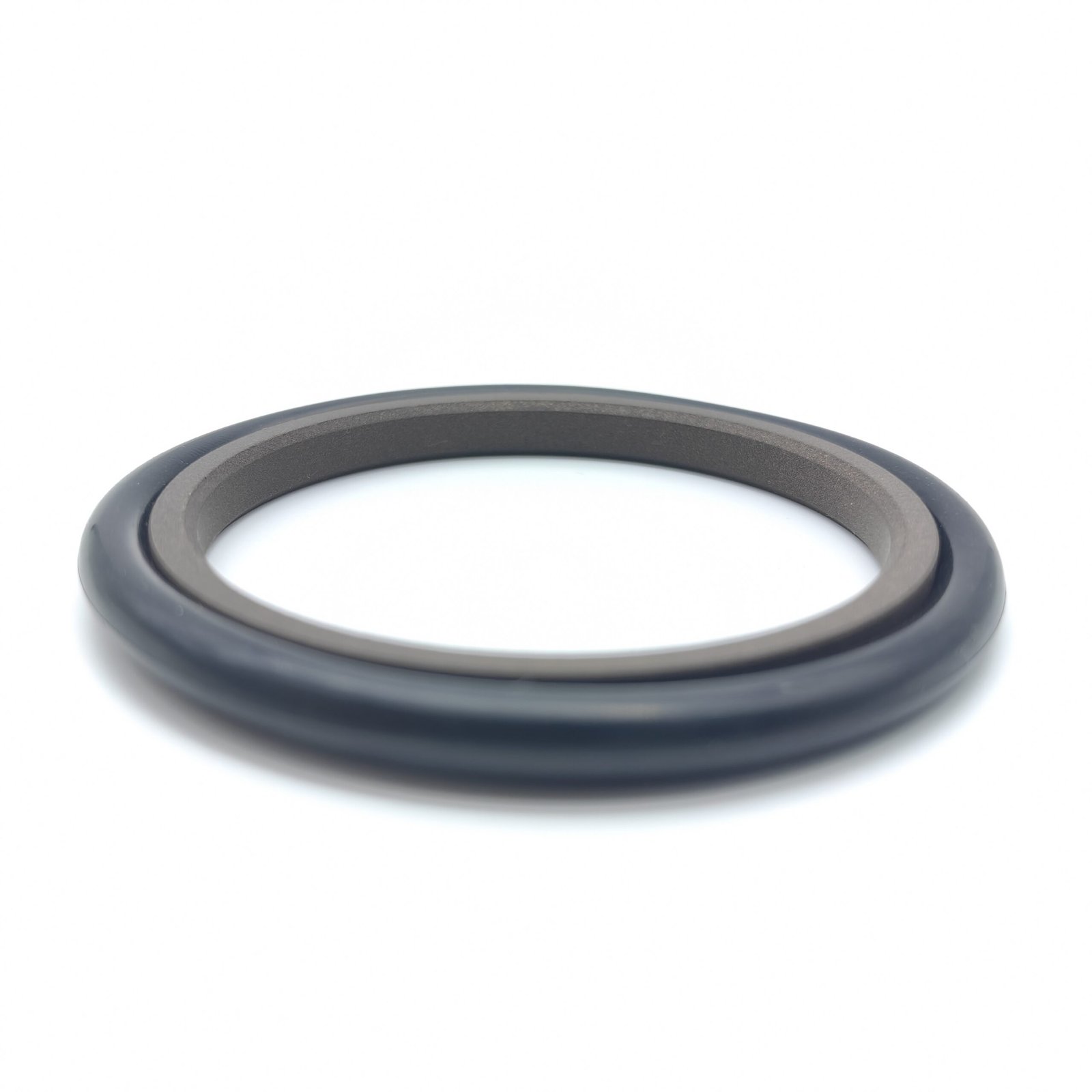
What a Step Seal Actually Is
A Step Seal is built differently on purpose. Instead of a symmetrical rectangle, the PTFE ring has a stepped cross-section — one side is the low-pressure side, the other is the high-pressure side, and the sealing lip only faces one direction. The O-ring sits on the outside of the step, preloading the lip and compensating for wear as the PTFE gradually breaks in.
Here’s the catch: a Step Seal only seals properly against pressure coming from one side. If pressure reverses, the seal doesn’t hold — which is why, if you need sealing in both directions on a rod, you install two Step Seals back-to-back rather than relying on one.
That single-direction design isn’t a weakness, it’s a trade-off. The stepped profile resists extrusion better than a symmetrical ring under high pressure, and it runs noticeably smoother at low piston speeds — which is exactly the situation you get on piston rod seals, where the seal has to hold pressure from inside the cylinder while sliding against the rod’s polished surface on every stroke.

In practical terms, a Step Seal gives you:
– Better extrusion resistance at high pressure
– Smoother, more stable performance at low speed
– Long service life on precision hydraulic and pneumatic transmission applications — provided installation is accurate
Side-by-Side Comparison
| Glyd Ring | Step Seal | |
|---|---|---|
| Cross-section | Rectangular, symmetrical | Stepped, asymmetrical |
| O-ring position | Inside the PTFE ring | Outside the PTFE ring |
| Sealing direction | Bidirectional (double-acting) | Unidirectional (single-acting) |
| Typical location | Piston / bore seal | Piston rod / shaft seal |
| Best suited for | Harsh conditions — heat, cold, contamination | High-precision hydraulic/pneumatic transmission |
| Main advantage | Great scraping action, strong wear resistance | Excellent extrusion resistance, stable at low speed |
| Main trade-off | Two-piece design can raise replacement cost | Needs precise installation and orientation |
Installation Notes Worth Knowing
A couple of details trip people up during installation:
- Bore-side O-rings typically sit on the inside of the slide ring, while rod-side O-rings sit on the outside. It’s a small detail, but getting it backward defeats the seal.
- Reversed variants of both designs exist, though you’ll run into them far less often than the standard configurations described here.
- On smaller bore diameters — under 40 mm — go with a split-groove design rather than trying to force a solid Glyd Ring in as a single piece.
- Glyd Rings are frequently paired with a guide ring or wear ring alongside them. This combination isn’t always obvious to newcomers, but it’s standard practice for supporting the piston and protecting the seal from side-loading.
If you want the full walkthrough with photos and groove dimensions, TYS has put together a dedicated Glyd Ring and Step Seal installation guide worth bookmarking before your next rebuild.
Choosing Between Them: The Real-World Version
Think about where the seal actually sits and which way pressure hits it:
- Sealing a piston inside a bore, with pressure alternating from both sides on extend/retract? Go with a Glyd Ring. You get two-way protection without worrying about which side faces which direction.
- Sealing a rod as it slides in and out of the cylinder, especially at low speed or under high pressure? Go with a Step Seal. It resists extrusion better and runs more smoothly where a rod seal actually lives.
- Need sealing pressure from both directions on a rod? A single Step Seal won’t do it — check out why piston rod seals are often installed in pairs before you spec the groove.
- Working in a dirty, high-temperature, or chemically harsh environment? The Glyd Ring’s scraping action and wear resistance usually make it the more forgiving choice.
- Need high-precision sealing in a hydraulic or pneumatic transmission system, and you can guarantee accurate installation? A Step Seal will typically outlast a Glyd Ring in that specific role, though it costs you some tolerance for installation error. If you’re weighing extrusion risk at higher pressures, it’s also worth pairing either seal with a properly sized back-up ring to protect the groove clearance.
In Summary
Both seals share the same basic ingredients — PTFE plus an O-ring — but they solve different problems. A Glyd Ring is the generalist: symmetrical, forgiving on installation direction, and built to handle pressure from either side, which is why it lives on the piston. A Step Seal is the specialist: stepped, single-direction, and built for stability and extrusion resistance, which is why it lives on the rod.
Match the seal to where it sits and which way the pressure comes from, and you’ll get the service life the manufacturer promises. Match it wrong, and you’ll be back under the machine sooner than you’d like.
If you want to go deeper on materials, pressure ratings, and design variations, TYS’s complete guide to PTFE step seals is a good next stop, and the full TYS hydraulic seals catalog covers everything from piston seals to guide rings if you’re specifying a full cylinder rebuild.